Screen & Digital Print Production Processes
Countryside Art produces high-quality printed textiles for museums, galleries and heritage organisations, often featuring fine art images. Exactly the same state-of-the-art equipment and very skilful techniques are used for all customers commissioning bespoke tea towels, aprons, bags plus other kitchen textiles and fabric giftware.
We use two methods of direct-to-textile pigment printing: Screen Printing and Digital Printing. Below we explain how each process works, from fabric to finished product.
Screen Printing
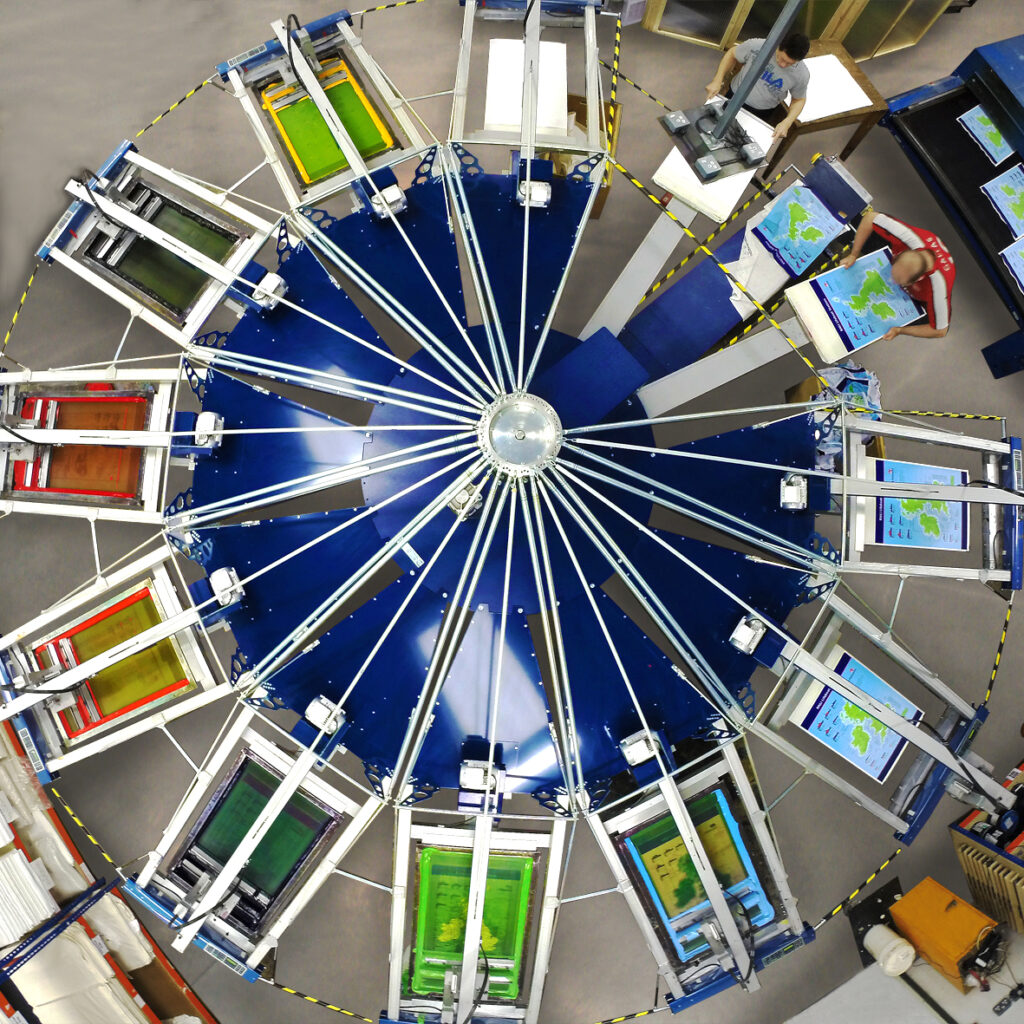
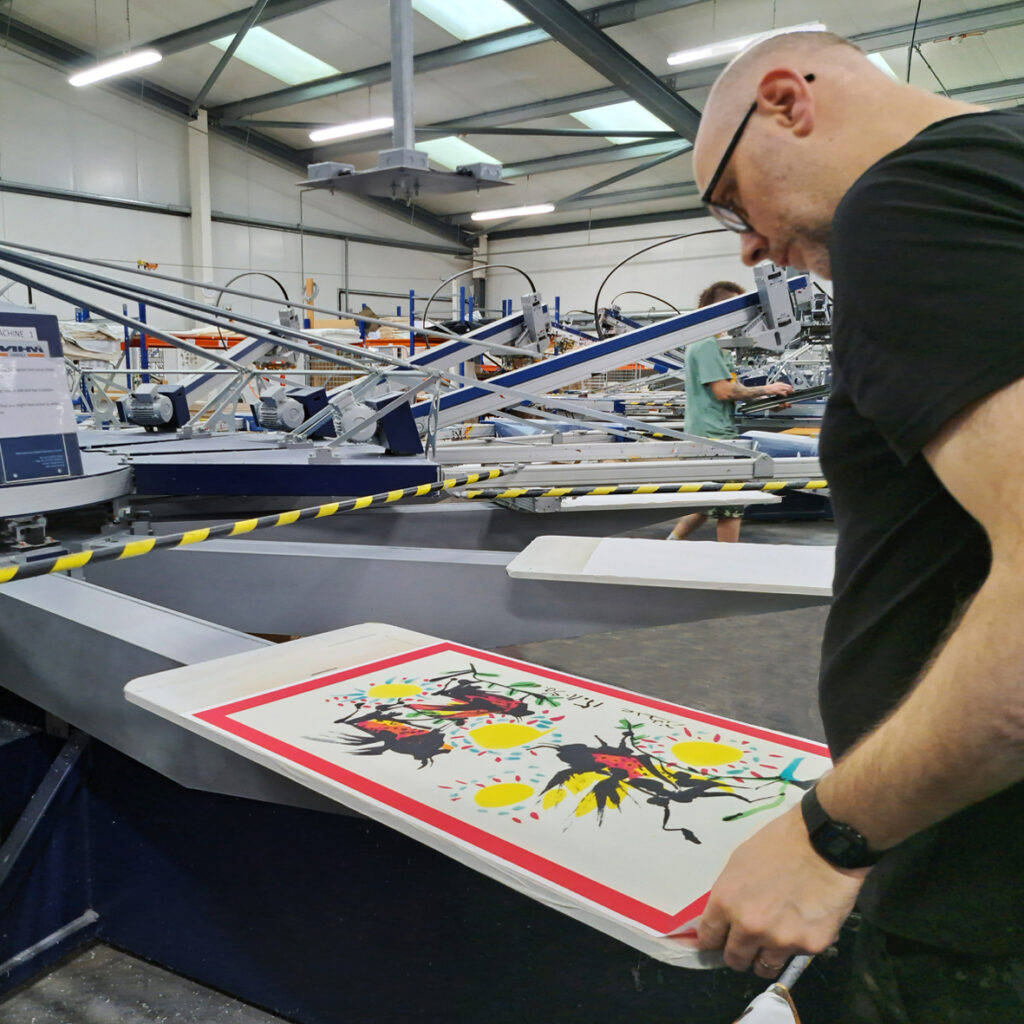
Screen printing is one of the oldest forms of printing and remains one of the most versatile — producing durable, vibrant prints that are especially cost-effective on longer print runs.
- We screen print using our state-of-the-art MHM4000 screen printing machines — among the best in the world, with features not found on any other screen-printing machine.
- An extremely accurate auto-registration system gives superb repeatability and sharp, crisp prints.
- We can print in up to 10 colours with complete accuracy.
- Our skilled screen-print operatives load blank fabric panels, remove printed items from the machine, and quality control every single print.
Fabric Preparation and Cutting for Screen Print
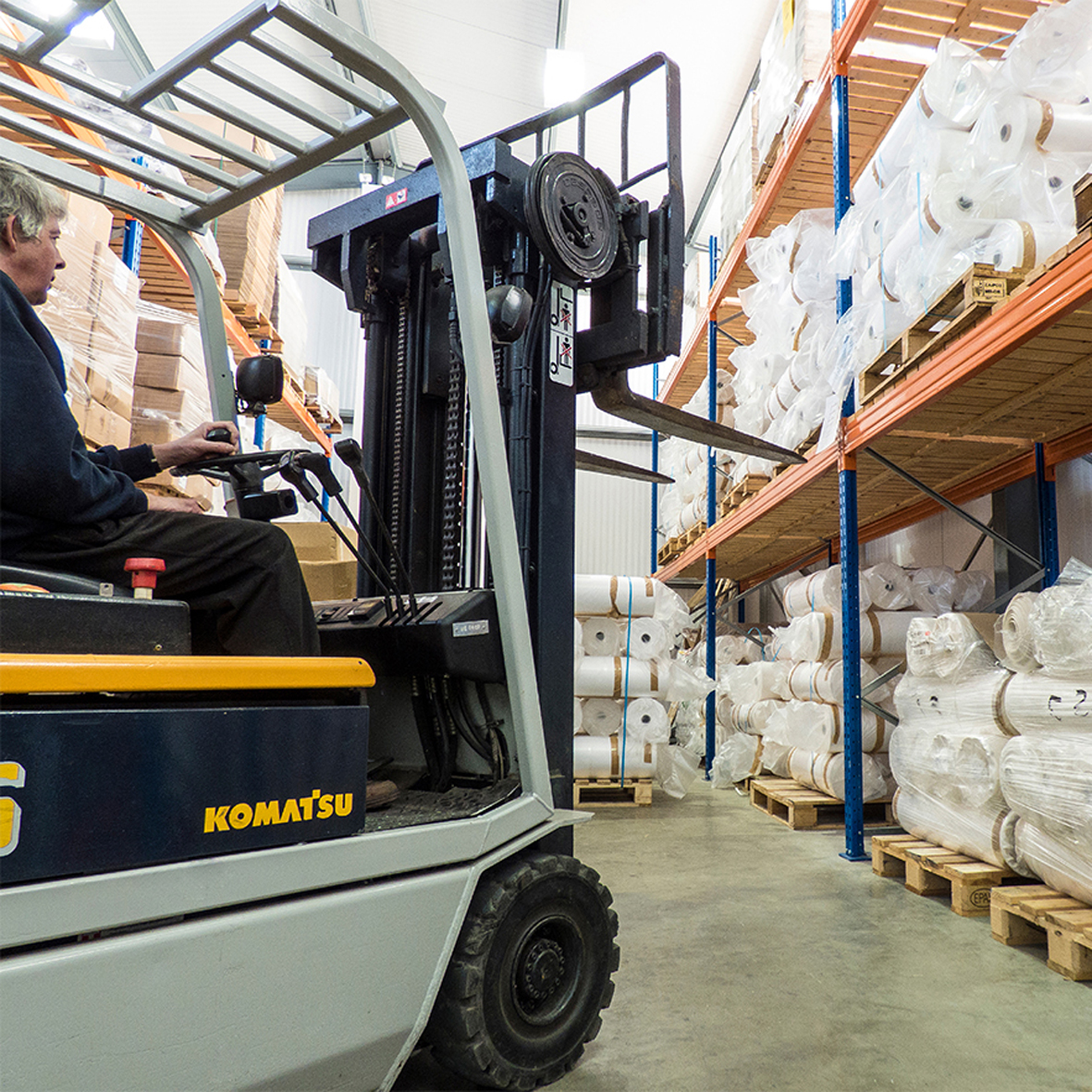
We have a close relationship with our fabric suppliers, and all our cloth carries ethical and environmental certification. Fabric is stored in large quantities in our warehouse, so we can meet all our customers’ requirements.
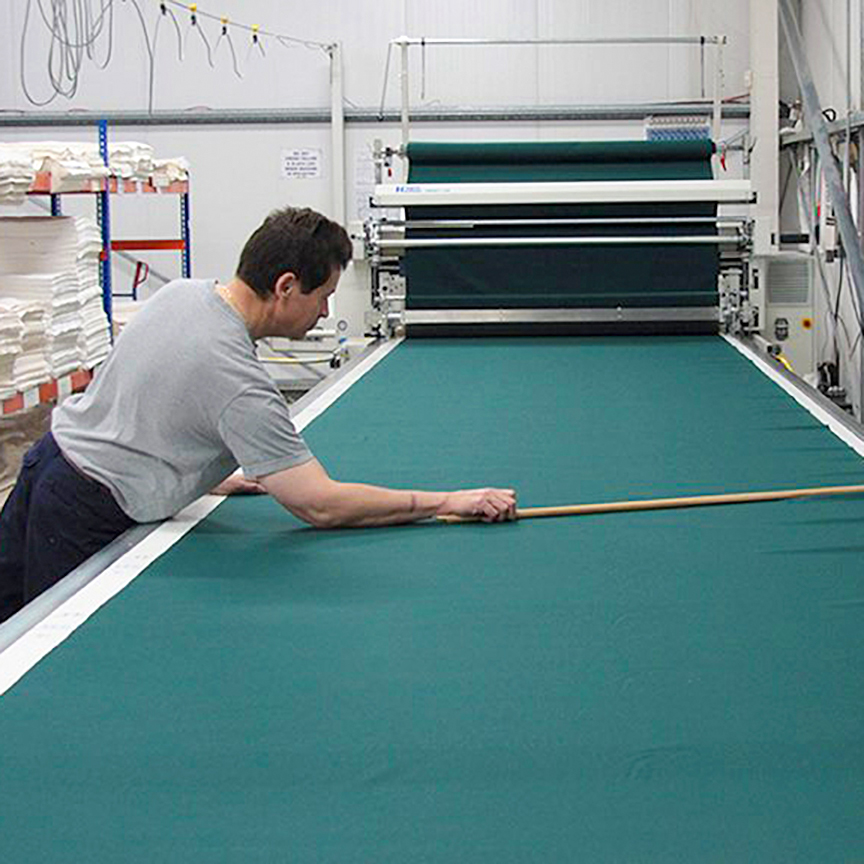
- Fabric is prepared for screen print on our Assyst Bullmer D600 spreading machine.
- This machine spreads multiple lays and cuts large quantities of fabric panels efficiently, ready for the screen-printing machines.
Screen Preparation for Screen Print
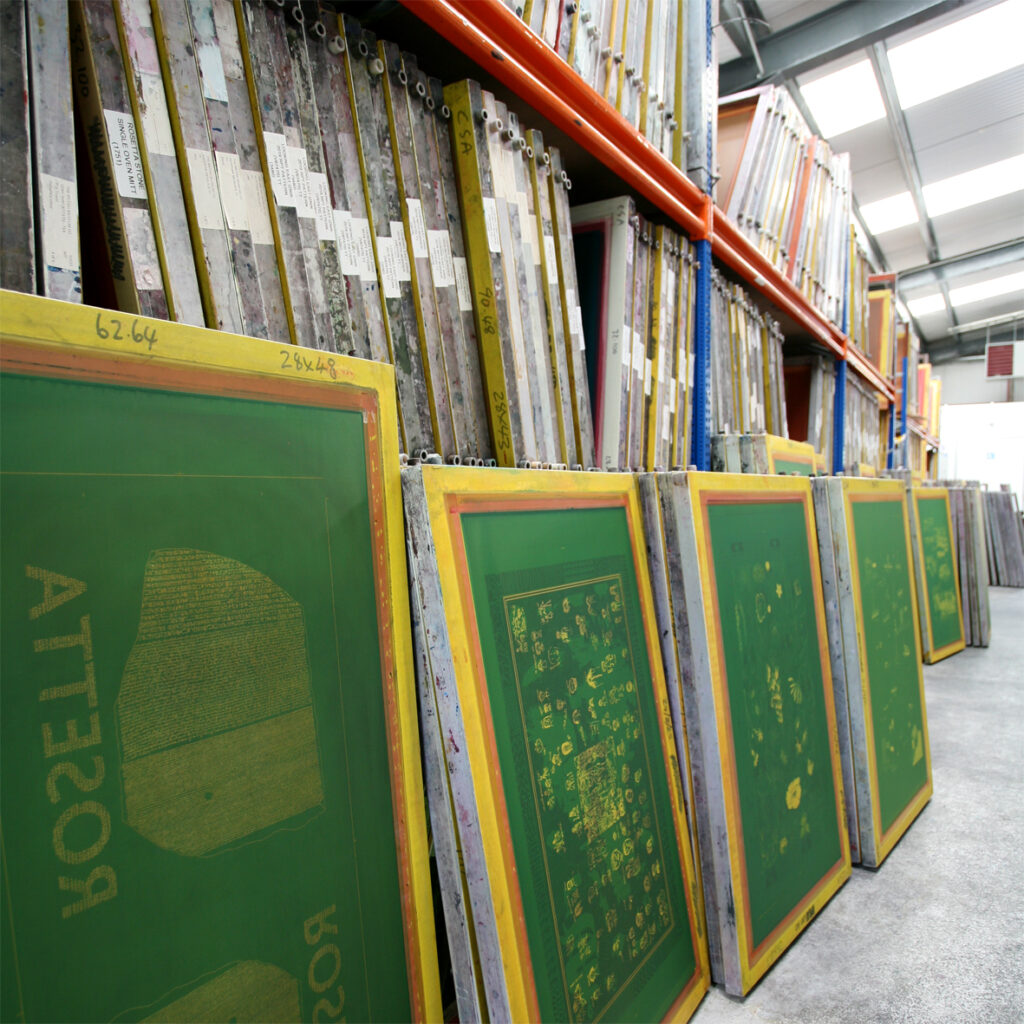
Each colour for screen print requires a separate screen. A screen comprises of an aluminium frame over which a specialised polyester fabric is very tightly stretched.
- The screen is coated with a light-sensitive plastic using an automated Zentner coating machine and dried in a large drying cabinet.
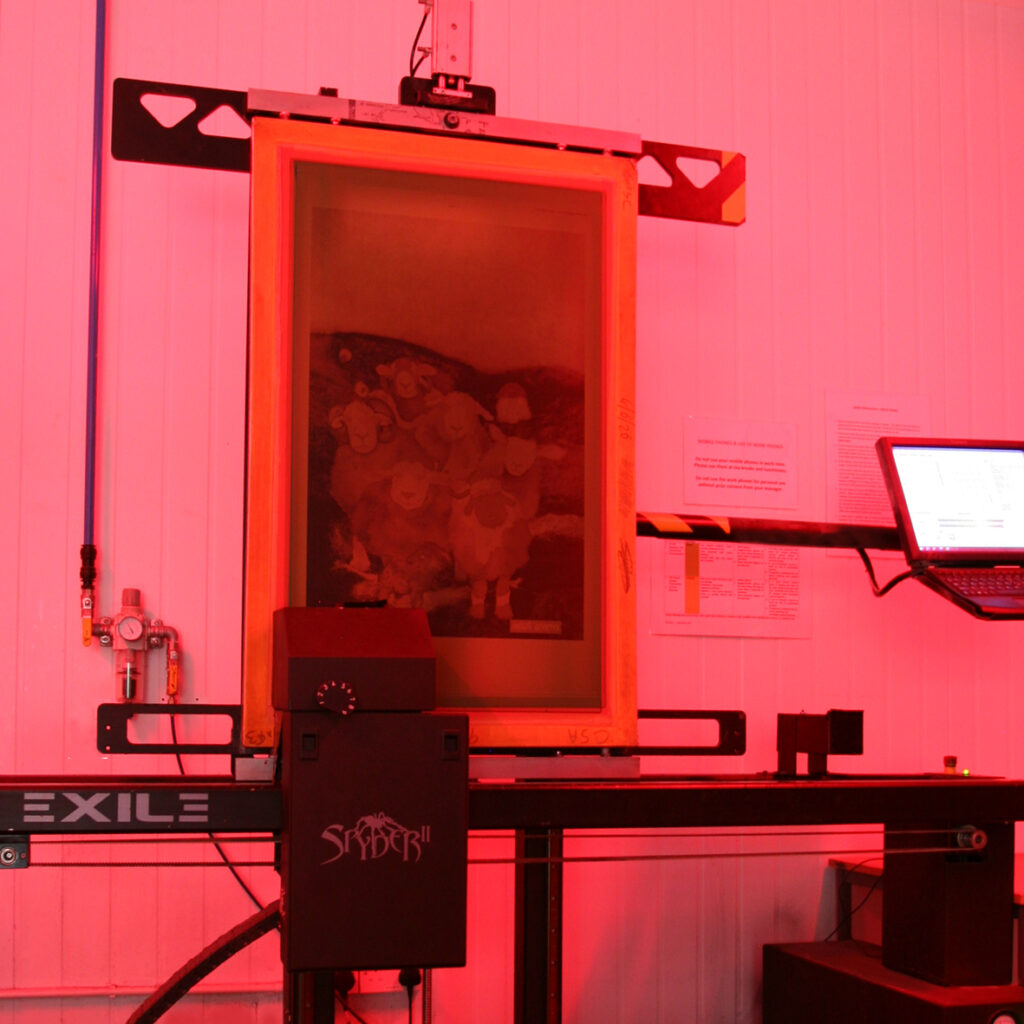
- Finalised artwork is transferred from our design team directly to our Exile SPYDER II Computer-to-Screen system, which uses a hot-wax process to print the image onto the screen’s surface.
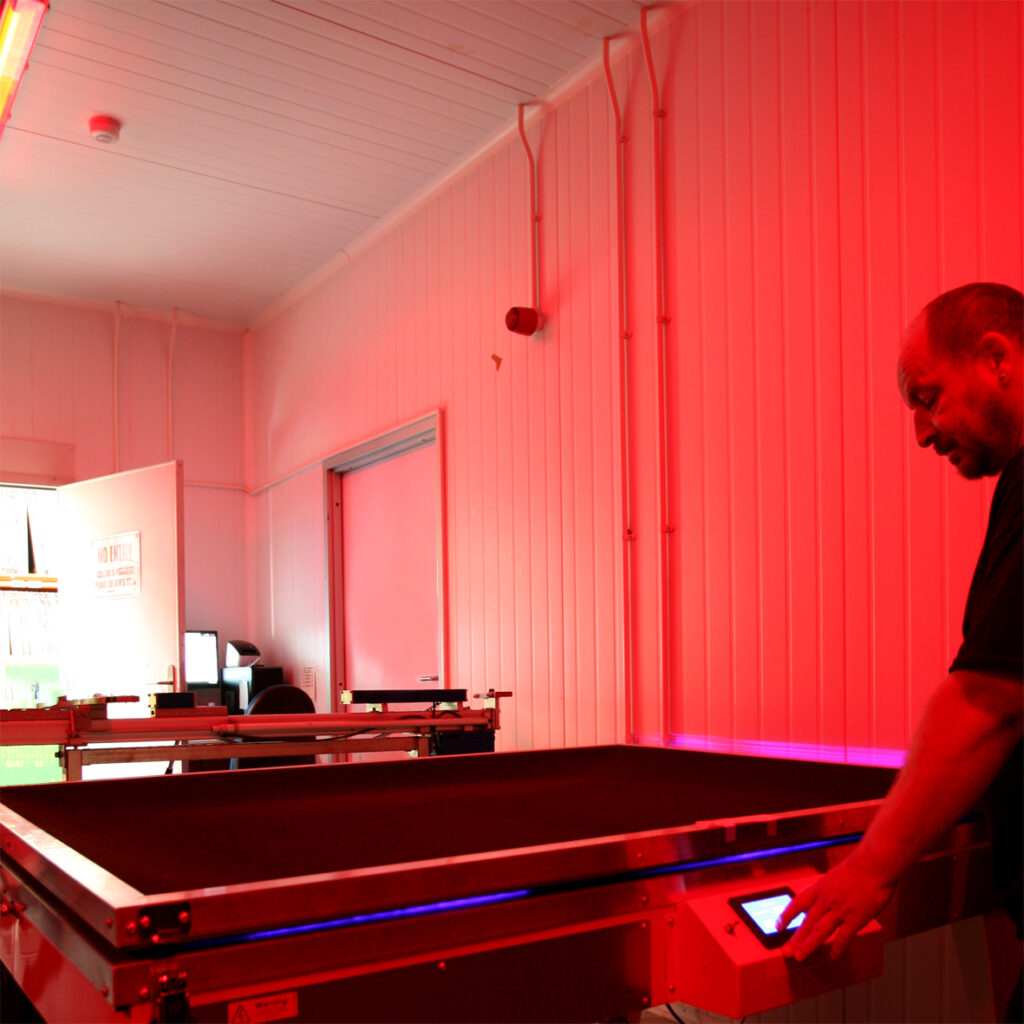
- The screen is then exposed to an exact amount of UV light to harden the light-sensitive coating where it isn’t protected by the wax. We use two Natgraph ultra-violet exposure units – one analogue and one LED.
- The screen is then jet-sprayed in another specialised Zentner screen washing machine, leaving the image as a stencil through which the water-based ink can pass.
Ink Preparation for Screen Print
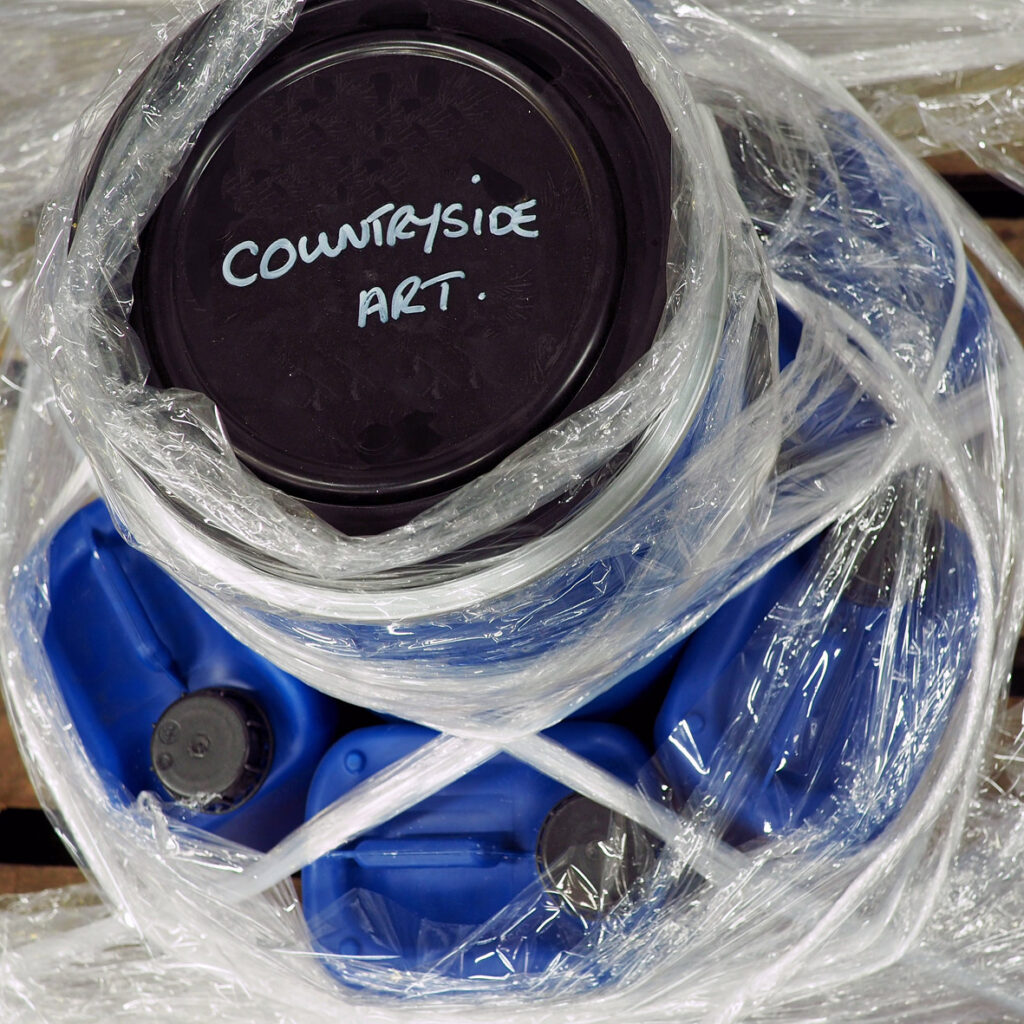
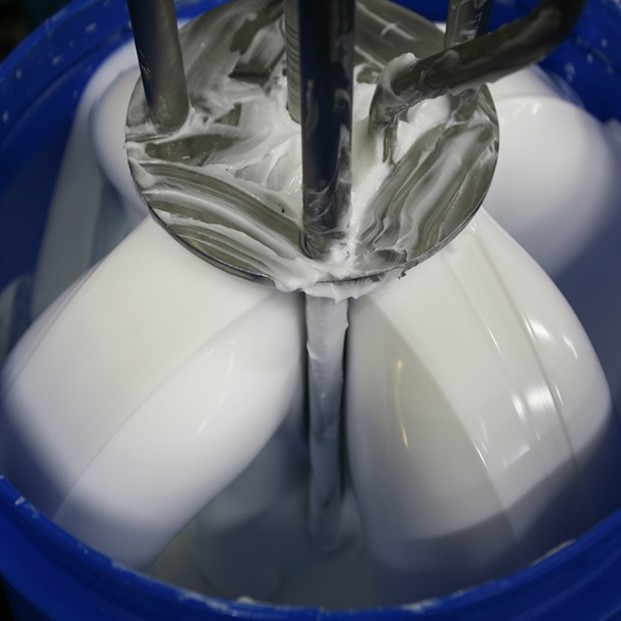
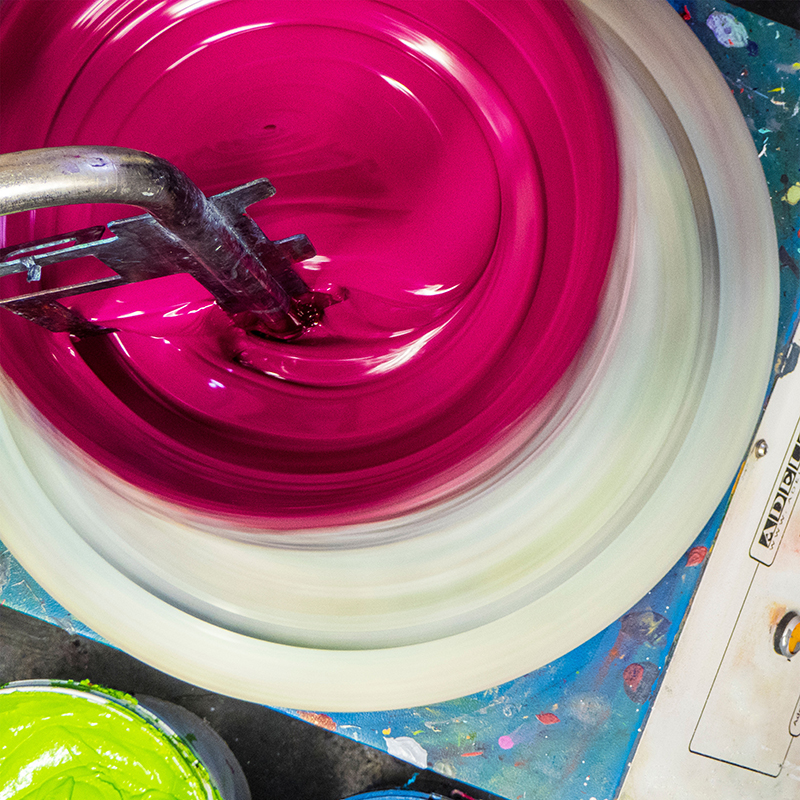
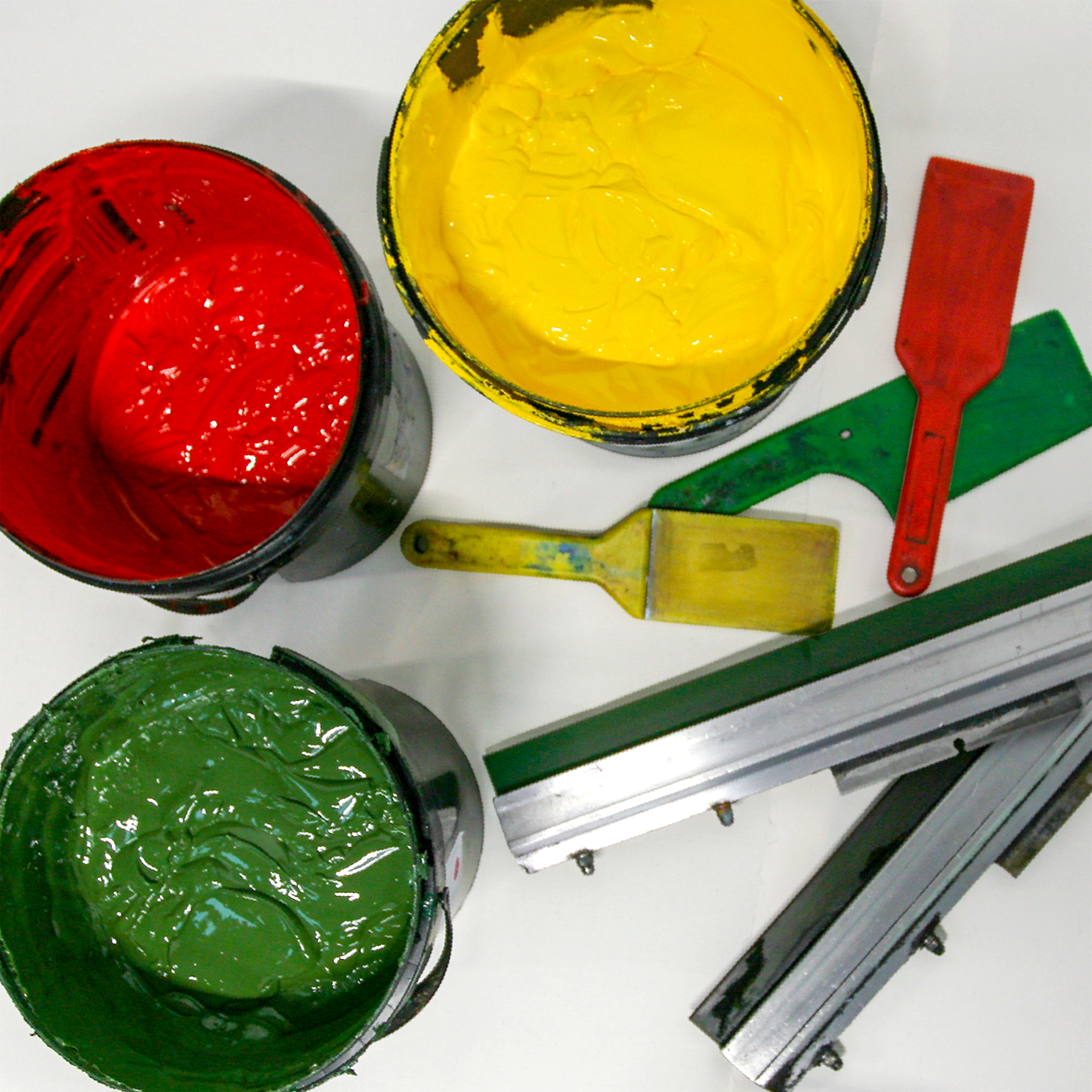
Protecting the environment is paramount to us, so for screen printing we only use solvent-free, water-based inks.
- Water-based inks are safer and better for the environment, our production staff, and the end user.
- The inks sink into the fabric, leaving no surface feel, and are colourfast and durable when washed.
- Colours are vibrant and, using our extensive ink database plus our operators’ skill, can be mixed to any Pantone reference or shade required.
- We dispense concentrated pigments using our precise COROB dispensing machine.
- We source all the components for our binders, colour concentrates, water-based metallic and discharge inks through one UK-based supplier, with whom we work closely on print quality, colourfastness and environmental standards.
- All our inks are REACH compliant.
Read more about our approach to sustainable production on our Ethical & Environmental Policy page, and more about our inks in our blog post on why our inks are green through and through.
Heat Curing for Screen Print
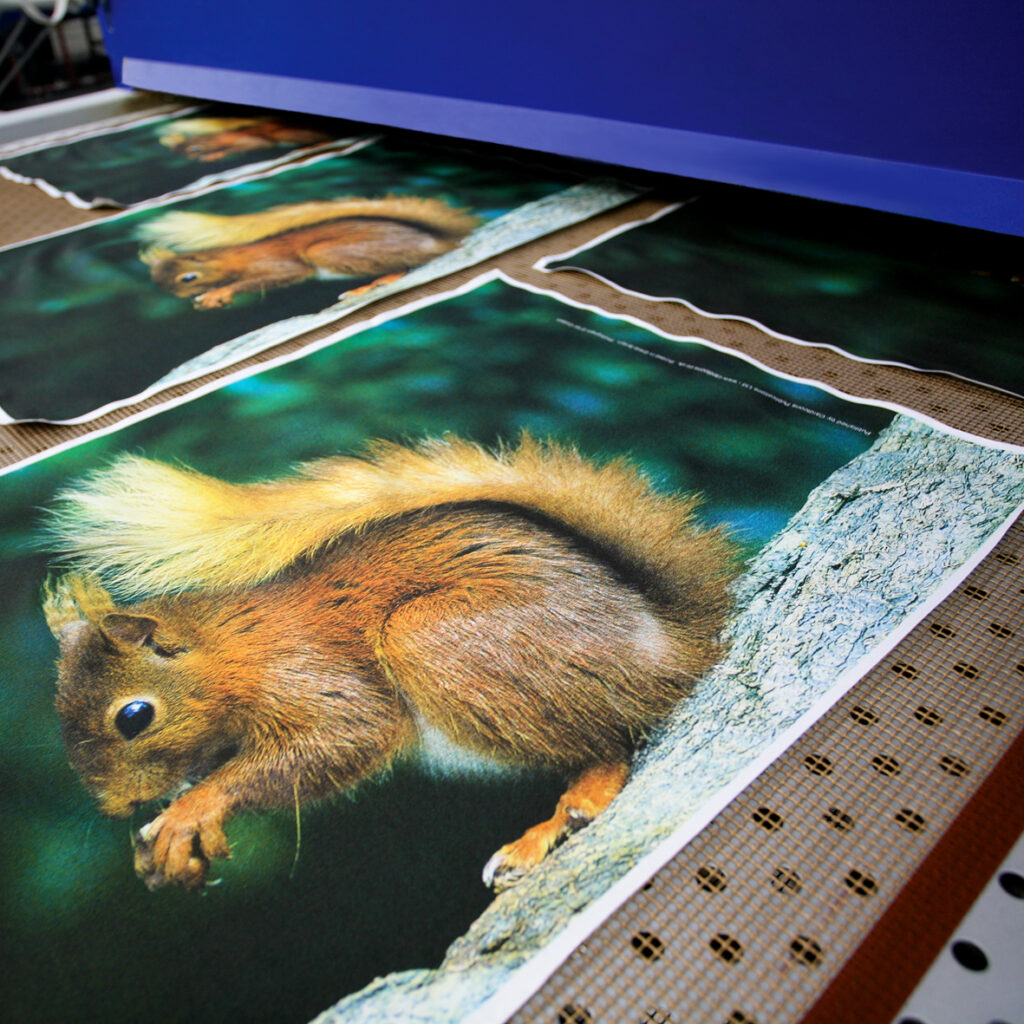
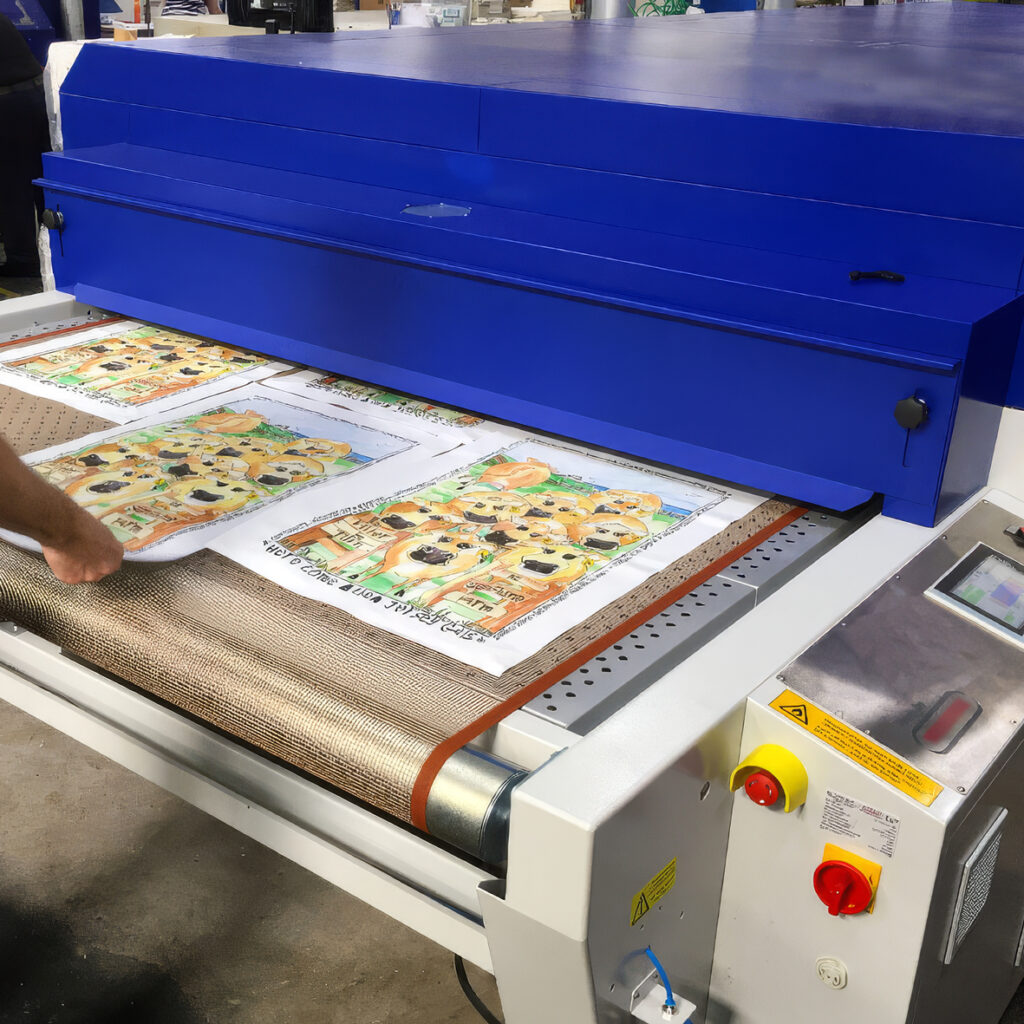
A colour-fast print is a vital part of the screen-print process.
- For screen print, we use two 6-metre Tesoma conveyor gas dryers.
- These highly efficient dryers heat the textiles to 160°C.
- The heated air flow dries the ink and creates the chemical reaction that bonds the ink pigments in the water-based binder to the fabric.
- The result is a best-in-class, highly durable heat-cure.
For more information get in touch via our Contact Page
Digital Printing
Digital printing is a great alternative to screen printing, especially for smaller or mixed product and design runs. It is also well suited to longer runs where designs are complex and better suited to a digital process.
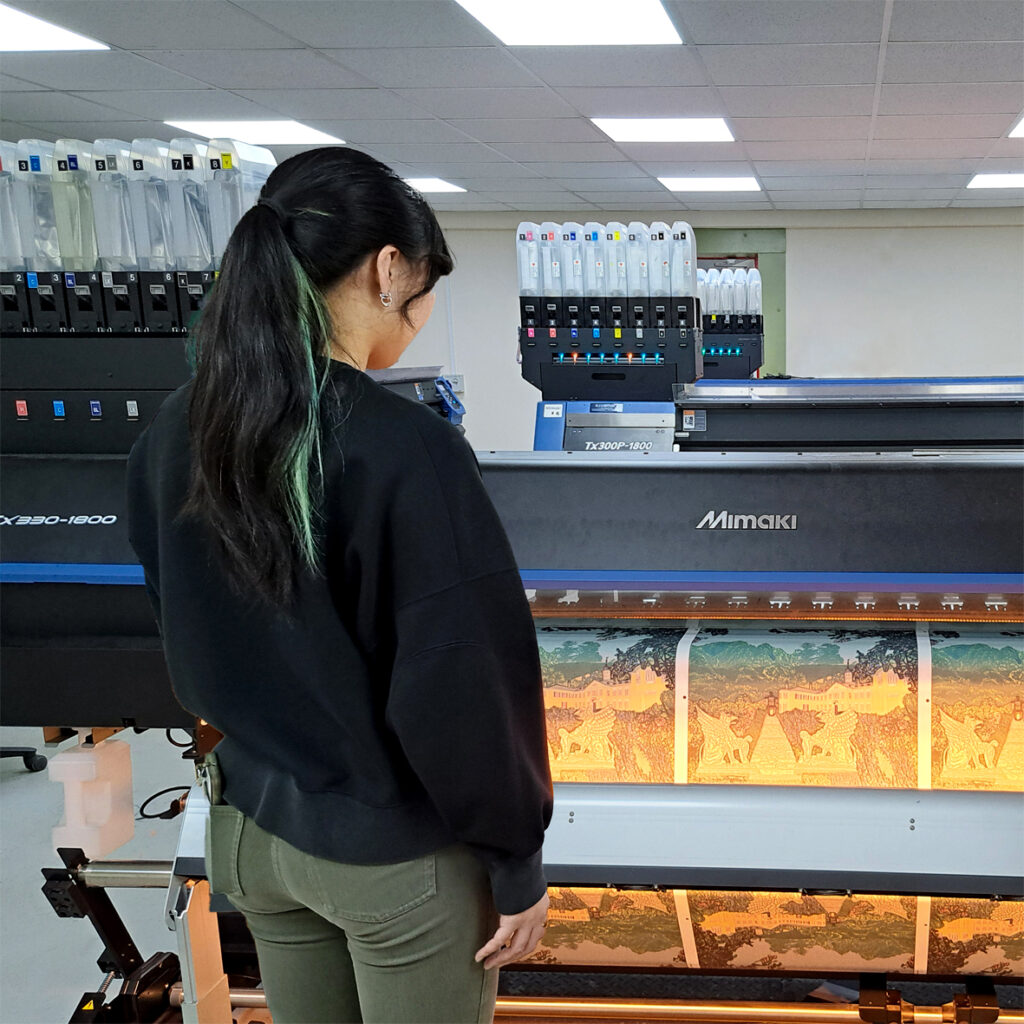
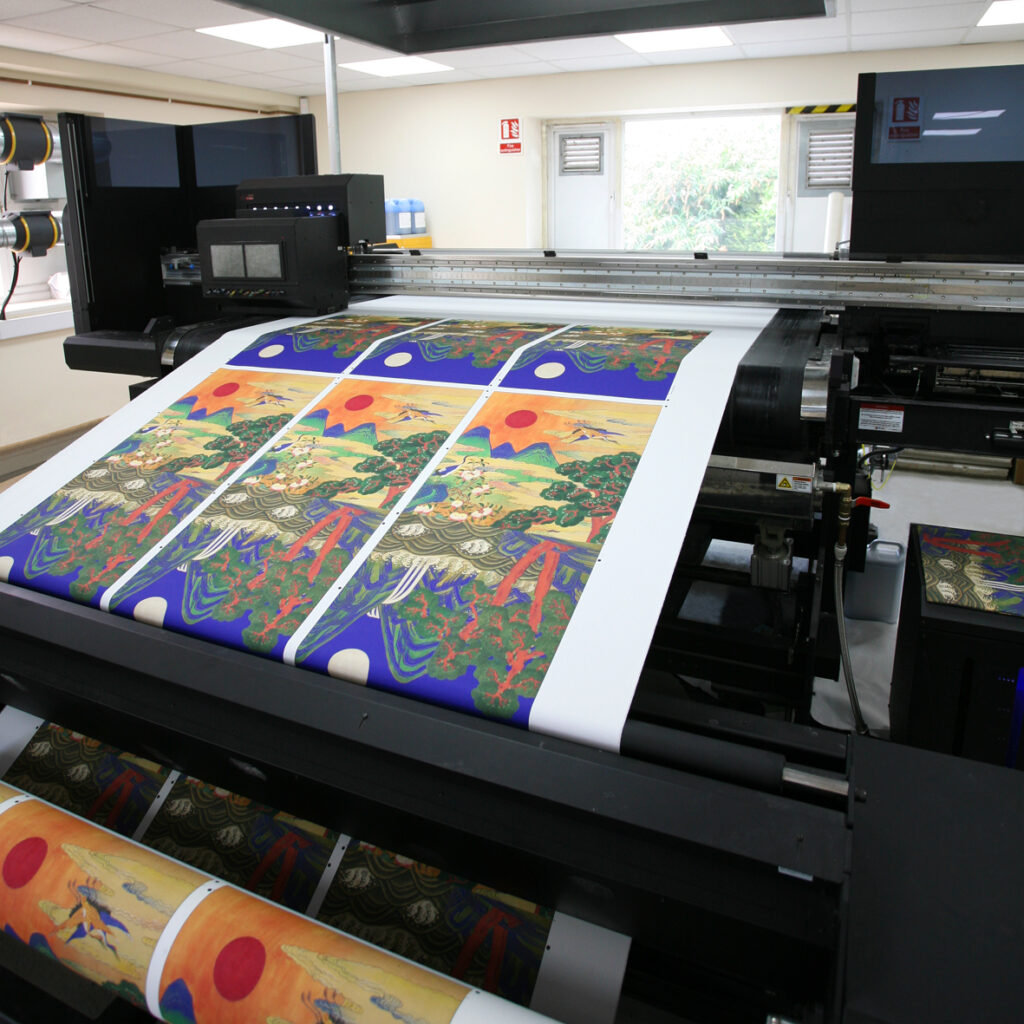
We use the following direct-to-textile digital printing machines:
- Two D-Gen Atrix Pro machines and one D-Gen Atrix H8
- Three Mimaki TX300 machines and one Mimaki TX330
This range of machines lets us choose whichever will give the best results for your design, and allows us to produce both large and small orders on short lead times.
Heat Curing for Digital Print
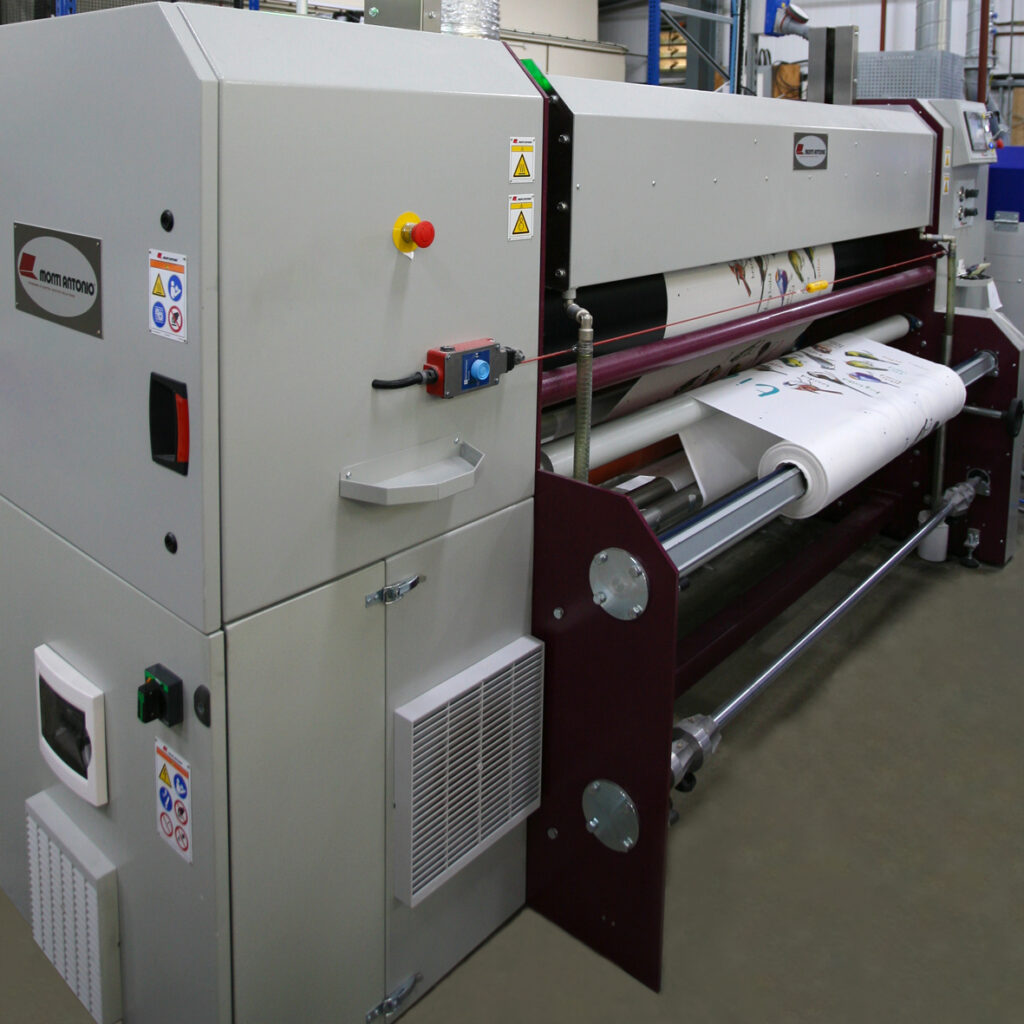
A colour-fast print is just as vital in the digital print process. We use two specialist machines that let us handle both large and small orders while meeting short lead times.
- The first is a Monti Antonio dryer, which uses an exclusive method of heating the cylinder. Its close, constant temperature control guarantees excellent reactivation quality, both in uniformity and in curing of the pigment inks.
- The second is a Transmatic TFIX 200D, a highly efficient and effective reactivator oven for fabrics printed with direct inks.
For more information get in touch via our Contact Page
Fabric Cutting & Inks for Digital Print
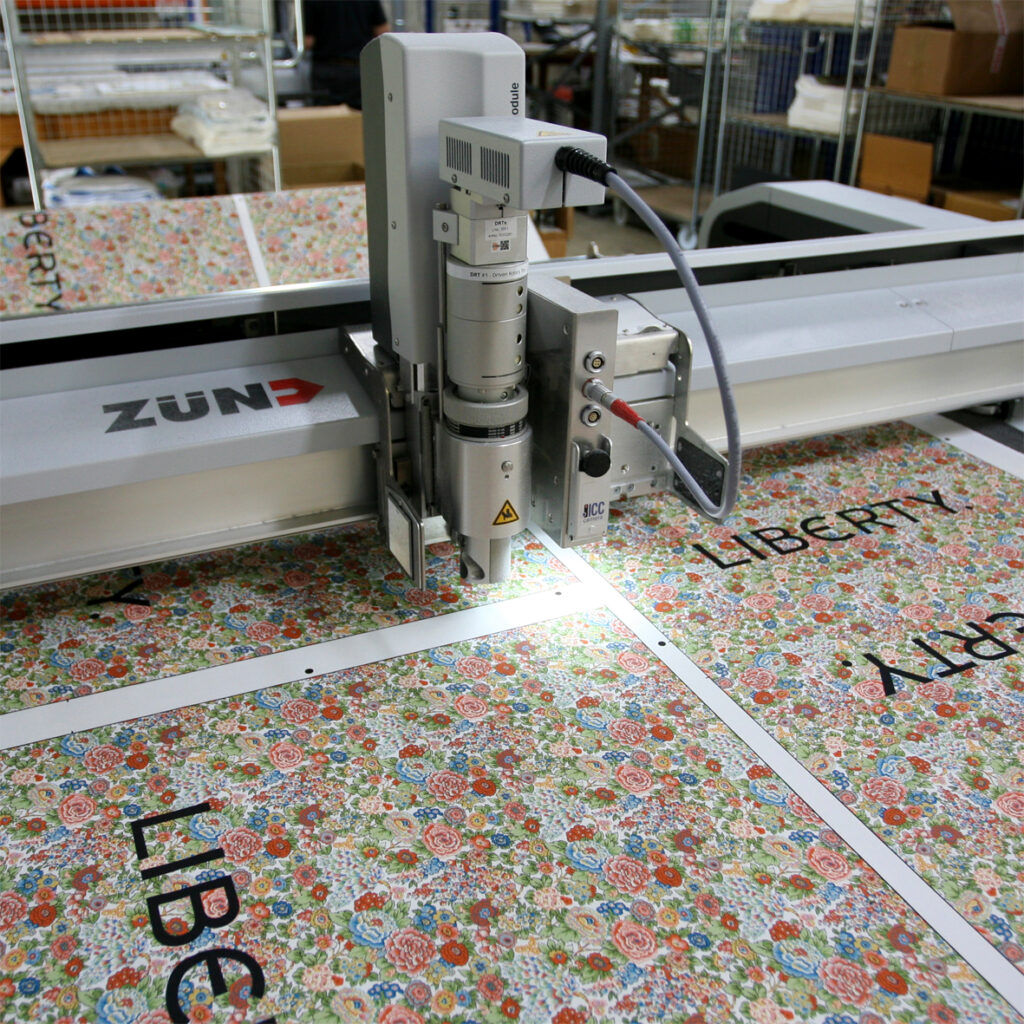
Fabric cutting is a vital part of the digital process that’s often overlooked — but not by Countryside Art. We’ve invested heavily in the best digital cutting equipment available.
- We use two Zund S3 digital cutters.
- These machines cut to extremely fine tolerances at high speed, giving us unparalleled quality and the ability to meet short lead times.
Inks Used for Digital Print
We only use pigment inks for digital printing.
- Our digital inks contain no substances on the REACH candidate list, nor any REACH Annex XVII-restricted or Annex XIV substances.
Read more about all our inks in our blog post on water-based ink.
Frequently Asked Questions
What’s the difference between screen printing and digital printing on fabric? Screen printing uses a physical screen per colour and is most cost-effective for longer runs of up to 10 colours, with strong, vibrant results. Digital printing suits smaller runs, mixed products, or designs with more colours or complexity than screen print can economically achieve.
How are your screens made for screen printing? Each colour uses its own screen, coated with a light-sensitive plastic and imaged using our SPYDER II Computer-to-Screen system. The screen is then exposed to UV light and jet-sprayed to leave a stencil through which water-based ink passes.
Are Countryside Art’s inks environmentally friendly? Yes. Our screen print inks are solvent-free and water-based, and our digital print inks are REACH compliant, containing no restricted or candidate-list substances.
What products can be screen or digitally printed? We print onto 100% cotton tea towels, aprons, bags, cushions, and other kitchen textiles and fabric giftware — see our full product range.
How many colours can you print? Up to 10 colours with complete accuracy on our screen printing machines. Our digital printing machines can achieve full colour, complex designs beyond that number.
Where is printing and production carried out? All printing, cutting, sewing production and final quality-control takes place in-house at our factory in Spilsby, Lincolnshire, England.